
Dr. med. Andreas Bernhardt
There are answers to what mitochondria and telomeres have to do with health and longevity. Here is an explanation of completely new approaches in medicine.
Mitochondrial medicine
The Mitochondrial medicine is concerned with the research and treatment of diseases and disorders associated with the mitochondria, the cellular power plants. It investigates the role of mitochondria in energy production, cell metabolism and cell ageing. This will enable us to better understand and treat diseases such as mitochondrial diseases, neurodegenerative diseases, fatigue syndromes, burn-out and age-related complaints in the future.
The human body needs energy to survive. This is obtained from food and then enters the cells via the blood. However, in order to be used or stored there, it must first be „burned“ - similar to gasoline in an engine. This is the task of the mitochondria, which are therefore also known as the body's power stations.
Structure of the mitochondria
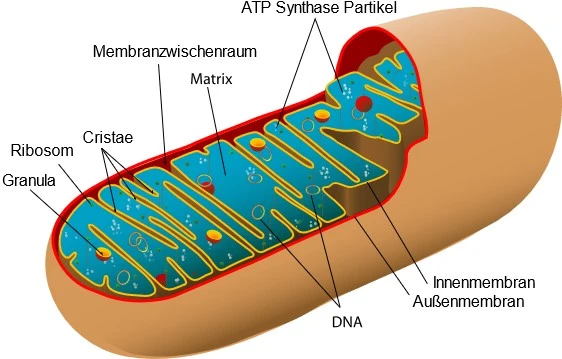
A mitochondrion is usually bean-shaped and consists of an outer membrane - the shell - and an inner membrane, which is folded. The liquid mitochondrial matrix is located between the folds. The protein complexes contained therein are responsible for the actual energy production. It also contains its own genome, the mitochondrial genome, which accounts for around one percent of human genetic information. Defective mitochondria can cause around 50 different diseases. They are found in all cells except red blood cells. A cell can contain up to almost 2,000 mitochondria.
What do the mitochondria do?
- Production of adenosine triphosphate (ATP), the main source of energy in cells.
- The production of ATP largely takes place via cellular respiration. This makes energy from food usable for the body.
- ATP supplies the entire body with energy. Depending on how much physical or mental effort you put in, for example, more or less ATP is needed.
- Nerve and muscle cells require particularly high levels of ATP.
- Serve as calcium stores. Calcium is needed, for example, to maintain cell function. If calcium is needed in the rest of the body, the mitochondria release some of it.
- Also involved in cell death
What are mitochondrial diseases?
Mitochondrial diseases are a group of genetic disorders caused by malfunctions of the mitochondria. However, the malfunctions can also be triggered by a whole range of external (stress, radiation, xerohormones or toxins) and internal body interactions (epigenetic noise, exhaustion reactions, excess free radicals, etc.).
They can cause a variety of symptoms and diseases, as almost all cells in the body contain mitochondria.
Which drugs damage the mitochondria?
Antibiotics, gastric acid blockers, metformin for diabetes, statins as cholesterol-lowering agents and blood pressure medication can cause considerable damage, as can contraceptives such as the pill and many others. The mitochondria are damaged by their effects and have to be constantly regenerated.
What makes mitochondria non-functional?
Chronic stress of any kind, exposure to toxins and environmental toxins such as heavy metals, pesticides, insecticides and other chemicals, malnutrition, nicotine, alcohol, drugs, medication, preservatives and e.g. chronic inflammation.
How can we protect the mitochondria?
- A balanced diet with sufficient antioxidants, omega 3 and 6 fatty acids and vitamins. Key substances include copper, zinc, selenium and vitamins A, C and E.
- Sport and exercise can improve their function and promote the formation of new mitochondria.
- Stress reduction and relaxation techniques such as walks, jogging in the forest and/or meditation/yoga with breathing exercises
- Food supplements (nutraceuticals): resveratrol, NMN, coenzyme Q10, L-carnitine and alpha lipoic acid
Telomere medicine
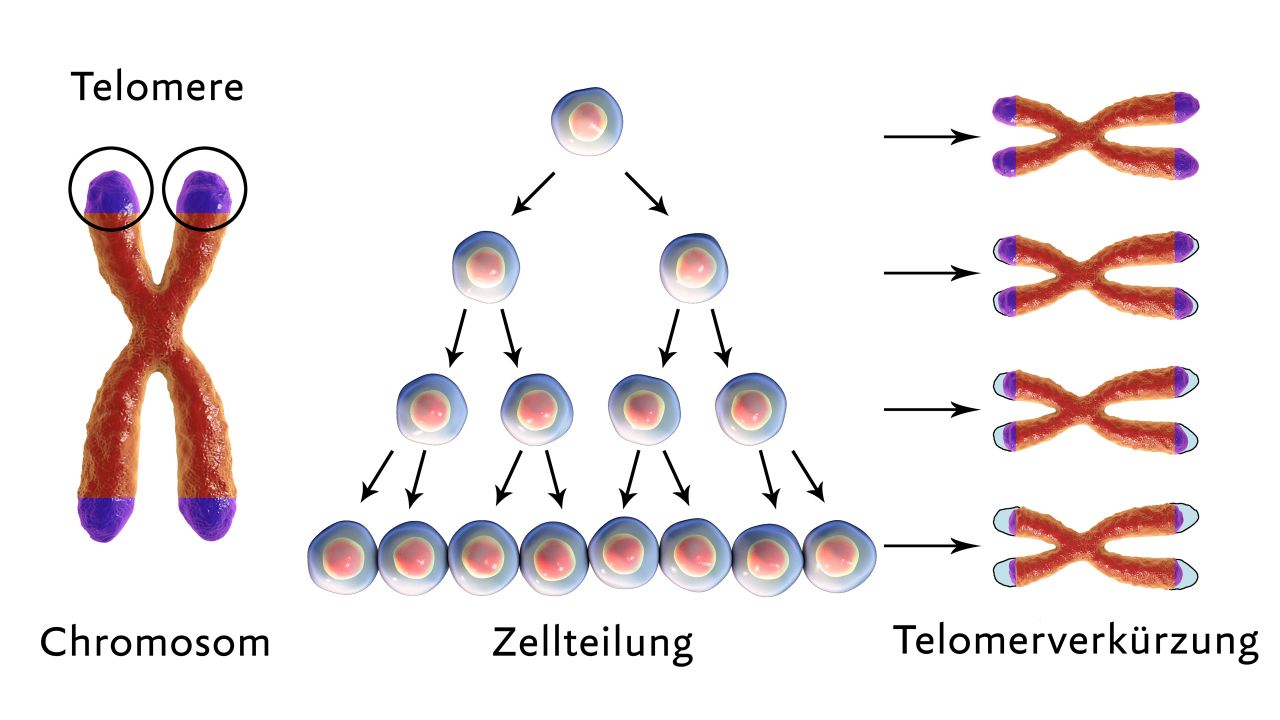
The Telomere medicine is concerned with researching and understanding telomeres, the repeating DNA sequences at the ends of chromosomes. They play an important role in the cell cycle and cell ageing - and therefore also in human ageing.
During cell division, the chromosomes, i.e. our genetic material, are protected by telomeres, which act like protective caps. Each cell division causes these ends to shorten. Shorter telomeres are associated with a number of negative health effects. In white blood cells, their length can be measured in the laboratory. If telomeres are protected, the lifespan of cells can be extended. This is now scientific consensus.
Can telomeres be lengthened again?
Scientists have now discovered an enzyme - telomerase - that artificially lengthens the telomeres of cells. This discovery should one day make it possible to eliminate age-related diseases associated with short telomeres, such as diabetes or heart disease as well as cancer or possibly even old age itself.
Treatment tips for lengthening telomeres include a healthy diet, regular physical activity, good stress management and sufficient sleep. In addition, certain dietary supplements and medications can be used to support telomere length.
Promising dietary supplements are:
- Omega-3 fatty acids with their anti-inflammatory properties
- Vitamin D for healthy cell ageing
- Antioxidants such as vitamins C and E and coenzyme Q10
- Resveratrol for better cell health
- NAD+ (nicotinamide adenine dinucleotide) is a coenzyme and plays an important role in the conversion of food into energy. Also important for DNA repair
- NMN (nicotinamide mononucleotide) is converted into the molecule NAD+ in the body and is fuel for the mitochondria
- NAM (nicotinamide) is also converted into NAD+ - also known as vitamin B or niacinamide
- NAD+
It is important to emphasize that further clinical studies are needed worldwide to confirm the effectiveness of these supplements in lengthening telomeres. It is expected that advances in the field of telomere medicine will lead to new therapies and prevention strategies for age-related diseases. In addition, it is important to consider both aspects of cellular health - mitochondrial and telomere medicine - to promote wellness and longevity.
The influence of bioidentical hormones on mitochondria and telomeres
With increasing age and especially with the onset of the menopause (andropause in men), hormonal changes can have an impact on the mitochondria and the length of telomeres. There is very clear evidence in ageing research that bioidentical hormone therapy (BHT) can help to mitigate the negative effects of ageing on mitochondria and telomeres. BHT aims to replace hormones that decline in the body with age and thus restore hormonal balance. This can have a positive effect on cell function and the ageing process.
Important: Seek support from specialized physicians if you want to take new measures - from mitochondrial and telomere medicine to BHT. They can advise you and help you weigh up the individual risks and benefits!
Lifestyle can be used to control many things
People can start making positive changes to improve their health at any age. Studies show that a healthy lifestyle can extend life by several years, but this depends on various factors such as genetics, environment and individual lifestyle. It is never too late to start living a healthy lifestyle and have a positive impact on life expectancy.
Literature tips on mitochondrial and telomere medicine
„Mitochondria: Diseases, diagnostics and therapy“ by Annette Schürmann and Jörg Heeren
„Telomeres: protective caps of the chromosomes“ by Elizabeth Blackburn and Elissa Epel
„Mitochondria: The energy centers of the cells“ by Alberts, Bruce and Johnson, Alexander
„Telomeres and telomerase: the secret of cell ageing“ by Elizabeth Blackburn and Elissa Epel
From the English-language literature:
„The Telomere Effect“ by Elizabeth Blackburn and Elissa Epel
„The Mitochondrial Free Radical Theory of Aging“ from Denham Harman
About Dr. med. Andreas Bernhardt:
Dr. Bernhardt is a specialist in general internal medicine with international training in endocrinology and better aging. He is a member of the Swiss Anti-Aging Society (SSAAMP) and the renowned Endocrine Society (Washington, D.C.). Prevention with biohormones instead of taking synthetic medication. His focus is on bioidentical hormone therapy as part of a holistic longevity concept. As an expert on the German-language platform wechselweise.net he is committed to raising awareness in the DACH region about hormonal changes in men and women during the menopause - with the aim of promoting health and quality of life in the long term.