
The importance of healthy intestinal flora is now undisputed. This applies to almost all chronic diseases and in particular to people who suffer from autoimmune diseases. Multiple sclerosis (MS), rheumatoid arthritis, type 1 diabetes and Parkinson's disease are just a few examples. In addition, the intestinal flora plays an important role in the development of Alzheimer's dementia [1] and, of course, in inflammatory bowel diseases such as Crohn's disease and ulcerative colitis [2].
Numerous scientific studies have shown that restoring gut health plays a central role in reducing disease activity and regaining physical and mental performance. In this context, foods and supplements are often mentioned to help those affected to eliminate dysbiosis (pathological disturbance of the colonization of the intestine with beneficial bacteria). Unfortunately, there is often confusion around the terms pre-, pro- and postbiotics. This article provides a clear explanation of these terms and shows how they work together to promote gut health.
Three important components for intestinal health
Prebiotics, probiotics and postbiotics work hand in hand to support the balance in the intestinal flora. While prebiotics serve as food for beneficial gut bacteria, probiotics add live, beneficial bacteria to the gut. Finally, postbiotics are the metabolic products of these bacteria, which have anti-inflammatory and immunomodulating effects.
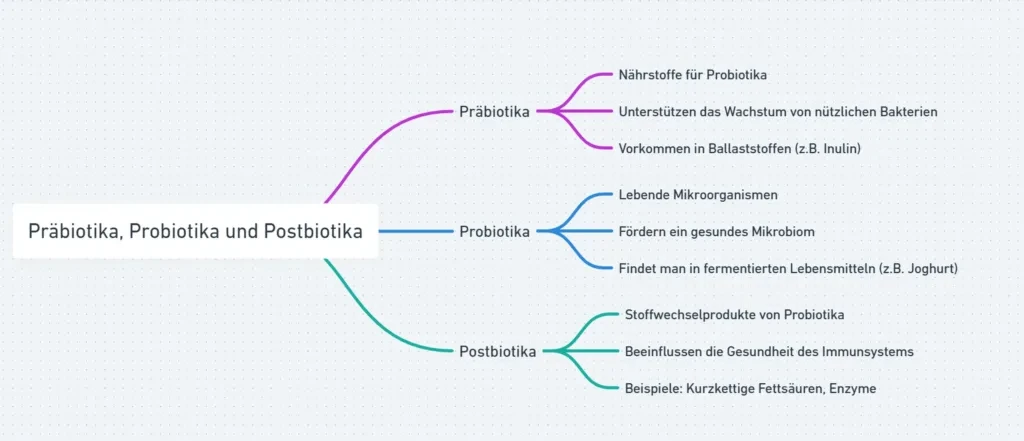
Figure 1: Mindmap on the differences between prebiotics, probiotics and postbiotics, including their functions and examples of occurrences. (DSGiP - Project Life-SMS 2024)
Prebiotics - food for the intestinal bacteria
Prebiotics are indigestible dietary fibres that specifically promote the growth of healthy intestinal bacteria such as bifidobacteria and lactic acid bacteria. They help with digestive problems such as constipation or diarrhea and hinder the growth of harmful bacteria.
Natural sources of prebiotics
Prebiotics are found in many natural foods, especially in:
- Chicory
- Jerusalem artichoke
- Onions
- Garlic
- Black salsify
- Artichokes
- Green bananas (resistant starch)
On the food supplement market, the following is often Inulin offered as a prebiotic. For targeted support of prebiotic intake, a consultation with a specialist is recommended.
Probiotics - The good bacteria
Probiotics are living microorganisms that have positive effects on the intestinal flora by promoting the growth of beneficial bacteria and displacing harmful ones. They are found in fermented foods and support the immune system and the intestinal barrier.
Occurrence of probiotics
Probiotics are found in various fermented foods, including:
- Natural yoghurt (unpasteurized)
- Kefir
- Sauerkraut
- Kimchi
- Miso
- Kombucha
- Sourdough bread
- Lactic acid fermented vegetables (e.g. cucumbers, beans)
Food supplements with probiotics are also available. However, care should be taken to select the right strain of bacteria. An analysis of the microbiome and professional advice can help to select the right product.
Postbiotics - the metabolic products of bacteria
Postbiotics are the end products resulting from the fermentation of food and the activity of Intestinal bacteria are created. They contain health-promoting substances such as short-chain fatty acids and enzymes that have an anti-inflammatory effect and support the immune system.
Occurrence of postbiotics
Postbiotics are found alongside probiotics in many fermented foods, including:
- Yoghurt
- Kefir
- Buttermilk
- Sauerkraut
- Kimchi
- Miso
- Natto
- Tempeh
- Apple cider vinegar
- Kombucha
Conclusion: A strong trio for gut health
The synergistic effect of pre-, pro- and postbiotics is crucial for maintaining healthy intestinal flora. Prebiotics prepare the soil, probiotics add live, beneficial bacteria and postbiotics develop their health-promoting effects due to the enzymes they contain, micronutrients that are very easily available to the body and short-chain fatty acids. If you integrate these components into your diet or support them with suitable food supplements, you can sustainably promote your intestinal health and immune system and build up a protective shield against autoimmune diseases and neurodegenerative processes.
About Dr. med. Andreas Bernhardt:
Dr. Bernhardt is a specialist in general internal medicine with international training in endocrinology and better aging. He is a member of the Swiss Anti-Aging Society (SSAAMP) and the renowned Endocrine Society (Washington, D.C.). His focus is on the bioidentical hormone therapy and studies on biohormones. As an expert on the German-speaking platform wechselweise.net he is committed to raising awareness in the DACH region about hormonal changes in men and women during the menopause - with the aim of promoting health and quality of life in the long term.
In-depth sources:
- Cammann, D., Lu, Y., Cummings, M.J. et al. Genetic correlations between Alzheimer's disease and gut microbiome genera. Sci Rep 13, 5258 (2023). https://doi.org/10.1038/s41598-023-31730-5
- Zheng J, Sun Q, Zhang J, Ng SC. The role of gut microbiome in inflammatory bowel disease diagnosis and prognosis. United European Gastroenterol J. 2022 Dec;10(10):1091-1102. doi: 10.1002/ueg2.12338. Epub 2022 Dec 3. Erratum in: United European Gastroenterol J. 2023 Apr;11(3):313. doi: 10.1002/ueg2.12371. PMID: 36461896; PMCID: PMC9752296.